
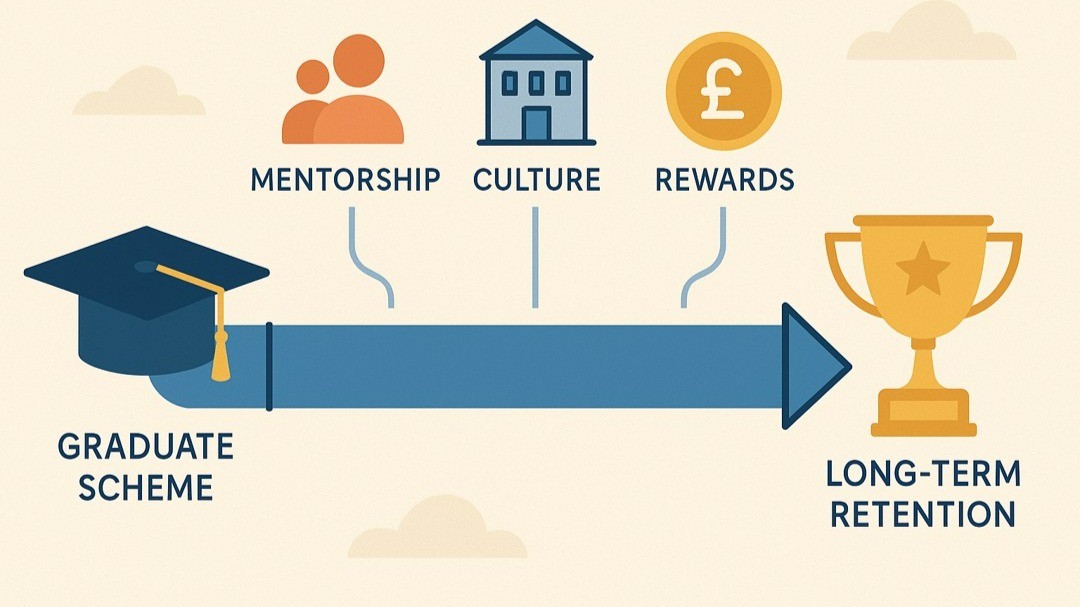

Every graduate training programme begins with the same unspoken question: will this person be worth keeping? Nobody announces it on day one, but from the first week, managers, supervisors and colleagues are forming a picture of each trainee. By the time the formal review arrives, much of the decision has already been made.
The good news is that the qualities employers value most are rarely about brilliance. They are mostly about behaviour, and behaviour can be chosen. Here is what decision-makers tend to look for, and how you can show it.
1. Reliability comes before talent
Ask a manager what they want from a new hire and you will hear the same thing in different words: someone I can count on.
Reliability is simple to describe and surprisingly rare. It means arriving on time, finishing what you start, and delivering what you promised, when you promised it. It also means telling people early when something will be late, rather than hoping nobody notices.
A trainee who produces good work consistently will be trusted more than one who produces brilliant work occasionally. Trust is what leads to responsibility, and responsibility is what leads to a job offer.
2. Attitude is visible in small moments
Employers watch how you respond when things are not going well. Do you complain when given a dull task, or do you do it properly? Do you get defensive under criticism, or ask what you could do better? Do you help a colleague who is overloaded, or stay strictly within your own list?
These small moments reveal character. Skills can be taught during a training programme, but a poor attitude is hard to fix, so employers pay close attention to it. A cheerful, willing, teachable trainee is a much safer investment than a skilled but difficult one.
3. The ability to learn quickly, and to show it
A training programme is, by definition, a period of learning. What employers really assess is how fast you learn and whether you learn from feedback.
If someone corrects you once, the mistake should not appear a second time. If you are shown a process, you should soon be able to run it with less supervision. This steady reduction in the effort others must spend on you is one of the clearest signs of progress.
You can make your learning visible by taking notes, asking thoughtful questions, and applying feedback quickly. When your manager sees that advice given on Monday is reflected in your work on Friday, they notice.
4. Initiative without arrogance
There is a difference between waiting to be told what to do and looking for what needs doing. Employers value trainees who spot small problems and quietly help solve them: a messy filing system, a report that takes too long to prepare, a process that confuses new customers.
The key is to show initiative respectfully. Suggest rather than criticise, and ask before changing anything that belongs to someone else. A trainee who says, “I noticed this step takes a long time. Would it help if I tried organising it this way?” comes across as thoughtful. One who announces that the whole system is wrong does not.
5. Good communication
Many trainees underestimate how much communication affects their reputation. Employers value people who:
- Listen carefully and repeat back instructions when unsure
- Write clear, polite, well-organised emails and reports
- Give short, honest updates without being chased
- Ask for help early instead of struggling silently
Clear communication saves everyone time, and people who save time for others are quickly valued.
6. Understanding the business, not just the task
Trainees who only understand their own small task tend to stay small in the eyes of the organisation. Those who understand how the business earns money, who its customers are, and why their work matters become far more useful.
Take an interest in how your role connects to the wider organisation. Ask how your department contributes to the bigger goals. When you can explain why a task matters, you start to think like someone who belongs there permanently.
7. Relationships across the organisation
Retention decisions are rarely made by one person alone. A manager may consult colleagues, other departments or senior leaders. If people across the organisation have had good experiences working with you, that carries real weight.
Be respectful to everyone, from senior managers to support staff. Offer help, thank people, and build genuine working relationships. A trainee who is liked and trusted by many people is much harder to overlook.
How to get retained as a Graduate Trainee
Getting retained in an accounting firm
8. Evidence of results
Good impressions are helpful, but evidence is stronger. Employers find it easier to justify keeping someone when they can point to concrete contributions: a project completed, a process improved, a client who gave positive feedback.
Keep a simple record throughout your training. Note what you worked on, what the outcome was, and any praise you received. When your final review comes, you will not be relying on memory or hoping your manager remembers. You will have a clear case to present.
9. Fit with the team and the culture
Employers also ask whether a trainee will fit into the team. This does not mean agreeing with everyone or hiding your personality. It means working well with others, respecting the way the organisation operates, and contributing positively to the atmosphere.
The best trainees adapt to the team’s norms while still bringing fresh ideas and honest opinions at the right moments.
10. A clear interest in staying
Finally, do not assume your interest is obvious. Managers sometimes hesitate to invest in someone who seems likely to leave. Have an honest conversation with your supervisor about your ambitions and where you see yourself growing. Ask what you would need to demonstrate to be considered for a permanent role.
That conversation shows commitment, and it gives you clear targets to work toward.
The bottom line
Being hard to let go does not mean being perfect. It means being dependable, teachable, helpful and visible for the right reasons. Employers are not looking for the trainee who never makes mistakes. They are looking for the one who owns them, learns from them, and steadily becomes more valuable to the team.
Start on day one, stay consistent through the whole programme, and by the time the decision is made, keeping you will be the easy choice.